
ADAM LEISHMAN — THE COMMERCIAL GUYS
A busy month, but not a one-speed market
It has been a busy month across the agency, with activity across sales, leasing and asset management.
At a headline level, the market is active. But when you drill into the detail, it is not moving evenly across every asset class, every property type, or every part of the market.
Industrial remains the strongest segment locally, sales enquiry is still present, and asset management has been busy with renewals, rent reviews and ongoing tenant discussions.
The softer points are becoming clearer too, particularly around office leasing, office sales, and some older industrial stock competing against newer product.
Quick update
Here is the short version of what we are seeing this month:
Sales enquiry remains strong, particularly for industrial assets.
More owners are talking about selling, both on market and off market.
Industrial leasing remains active, but the market is becoming more selective.
Newer industrial stock is creating stronger competition for some older sheds.
Office remains the soft spot, both for leasing and sales.
Asset management is busy, especially around renewals and market rent reviews.
Tenants are pushing back more often where rents have moved to the top of, or above, current market levels.
AI is starting to create a new type of challenge, with some tenants using it to generate arguments that sound confident but are not always correct.
Sales update
Sales remain one of the stronger parts of the market.
Buyer enquiry is still there, particularly for industrial assets. The appetite for well-positioned industrial property remains stronger than it does for most other asset classes, largely because buyers can more easily understand the income, the use, the land component and the underlying demand.
The more noticeable change this month is on the owner side. We are having more conversations with property owners about getting ready to sell, and we are seeing more sale opportunities come forward, both on market and off market.
That is a meaningful shift. For a while, many owners were holding tightly. Now, more owners are at least exploring timing, pricing, positioning and whether the current market gives them an opportunity to act.
Office sales are a different story.
There is still enquiry, but buyers are more cautious. Unless the yield properly reflects the perceived risk, buyers do not appear to have the same appetite for office assets as they do for industrial property. The risk profile feels different, and the market is treating it differently.
Leasing update
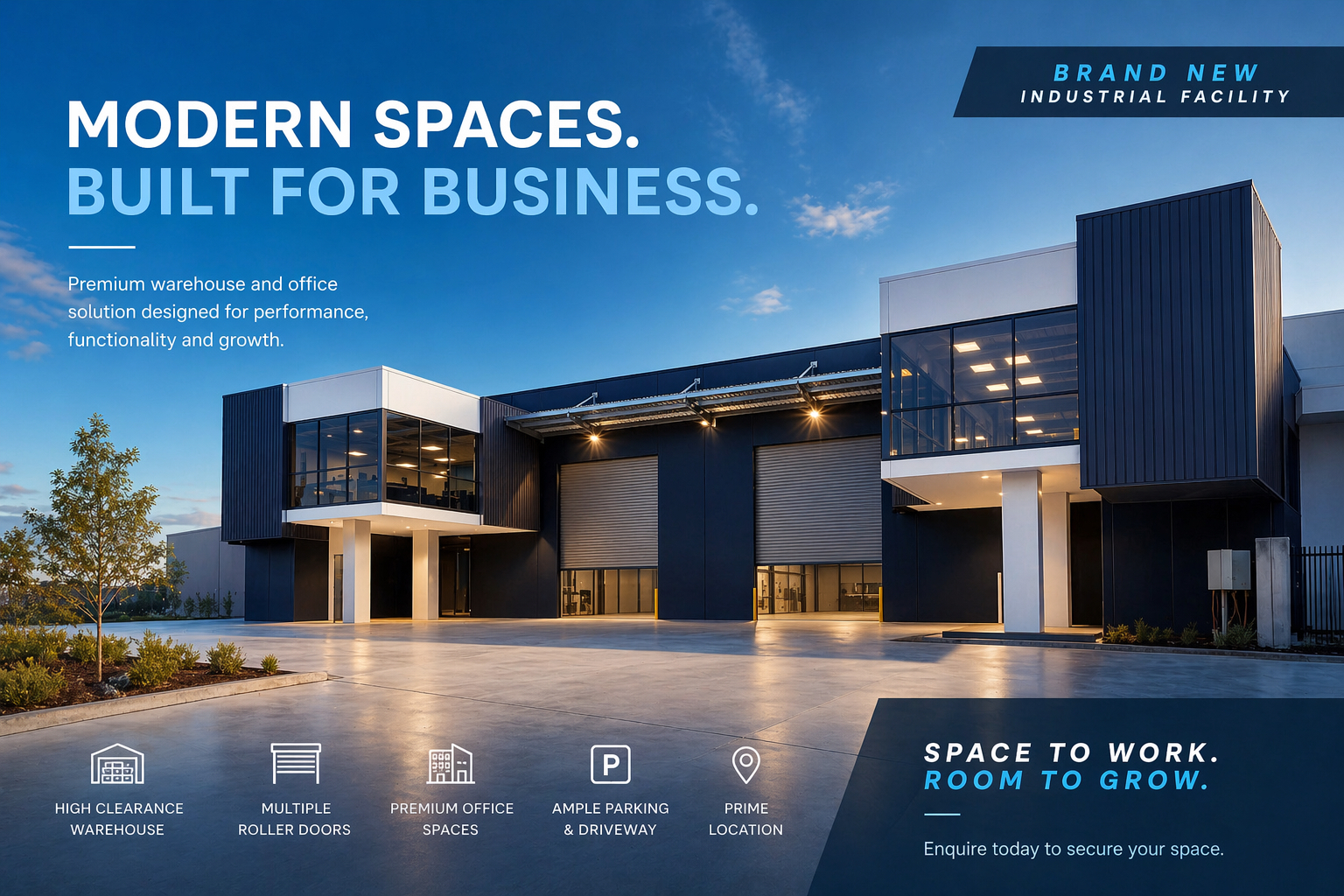
Industrial leasing remains active, but the detail matters.
We are still seeing enquiry across industrial stock, particularly where the property is functional, well-presented and priced correctly. Industrial remains the strongest leasing category in our local market.
However, we are also seeing more competition from newer industrial space. That newer stock is creating a clearer gap between properties that feel modern, efficient and easy to occupy, and older stock that may not present in the same way.
Some older sheds are taking longer to generate the level of response we would normally expect. Even with elevated marketing, video and strong presentation, certain older industrial properties are not producing the same enquiry levels they may have produced in the past.
That is not always easy to diagnose. In some cases, there is no single obvious reason. It may simply be that tenants have more choice, and newer stock is setting a different benchmark around presentation, amenities, access, clearance, parking, loading and overall usability.
Office leasing remains the clear soft spot.
In leasing, office enquiry is slow. That is the biggest contrast to industrial. Industrial still has activity, even if tenants are becoming more selective. Office leasing is much harder work at
the moment.
Asset management update
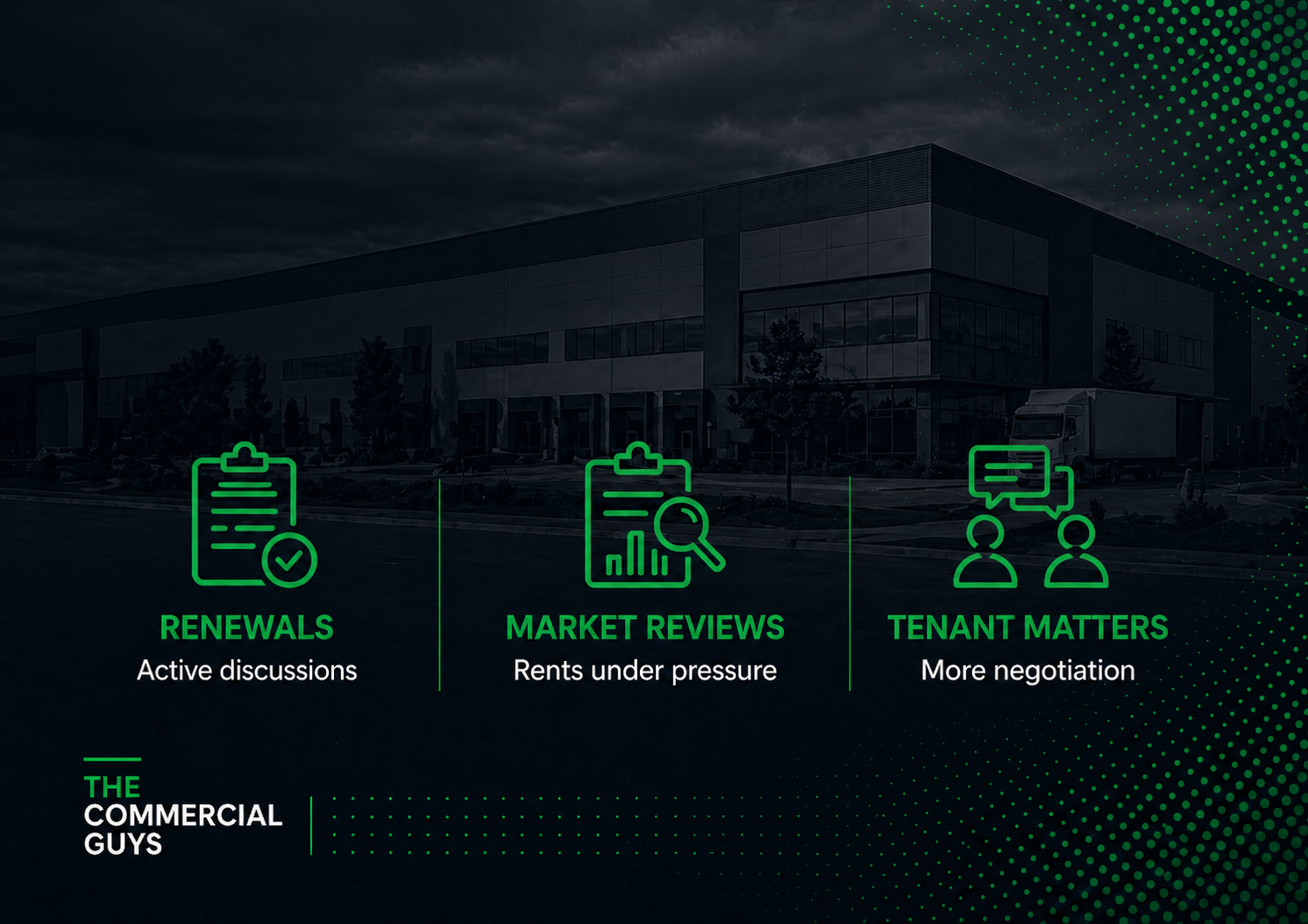
Asset management has also been busy this month, especially around renewals and rent reviews.
Over recent years, many properties have seen strong year-on-year rent increases. Fixed increases, CPI increases and market reviews have all played their part. In many cases, those increases have been sustainable because the broader market was moving in the same direction.
We are now starting to see the next stage of that cycle.
Some rents have reached a point where, at market review or renewal, tenants are questioning whether the current rent is at market, at the top of market, or in some cases above market.
That does not automatically mean the rent has to come down. Many tenants still renew at the current rent, and in some cases landlords can maintain rents that are above what might otherwise be considered market. But where tenants are under cost pressure and have competing options to compare against, they are becoming more prepared to ask the question.
We are now seeing tenants argue for reductions at market review on the basis that a market review should reflect the market rent, not simply continue the previous upward trend.
That is where the right approach at renewal time becomes important.
Landlords may have benefited from several years of appropriate or strong increases, but there can come a point where the evidence needs to be considered carefully. The goal is always to maximise the landlord’s outcome, but that does not always mean simply pushing for the highest possible number without regard to the tenant, the lease, the evidence and the risk of vacancy.
Good asset management is about protecting the owner’s position, understanding the market, and negotiating from a place of evidence rather than assumption.
The unexpected AI issue showing up in lease discussions
One newer issue we are starting to see more often is tenants using AI to draft arguments, correspondence and positions around lease matters.
The issue is not that tenants are using AI. The issue is that AI will often help a user argue the position they want to argue, even when that position is inconsistent with the lease, the facts, or the relevant Queensland leasing framework. That can make matters more time-consuming.
We are seeing situations where tenants become very confident in an incorrect position because it has been written in a persuasive way. In some cases, that then flows through to solicitors, who have to spend time unpacking and correcting arguments that appear to have been generated or shaped by AI.
It is a different AI story from the one usually told in the media.
In our world, the most noticeable impact of AI at the moment is not necessarily efficiency. It is more correspondence, more argument, and more time spent bringing lease discussions back to the actual document, the evidence and the correct legal framework.

Final thoughts
The overall message this month is that the market is active, but becoming more selective.
Sales remain strong, particularly for industrial. Industrial leasing remains the clearest source of tenant demand, but newer stock is creating more competition for older properties. Office remains challenging, both in leasing and sales. In asset management, renewals and market reviews are requiring more care as tenants reassess rents, costs and alternatives.
For landlords, the key is to stay close to the evidence.
Pricing, presentation, timing, lease structure and negotiation strategy all matter. In a more selective market, assumptions become risky. Good advice, good data and a clear understanding of the local market become even more important.