ADAM LEISHMAN — THE COMMERCIAL GUYS
There has been another noticeable lift in activity across the commercial market this month.
We are seeing increased enquiry across virtually all property types, more inspections and, importantly, more leasing transactions actually coming together.
Industrial remains active, but the improvement is broader than sheds. We are seeing stronger engagement across office, retail and mixed commercial properties as well.
That does not mean every property is suddenly easy to lease. Tenants remain selective.
There are simply more people back in the market, and they are asking better questions.
More Activity, Better-Informed Tenants
Leasing conversations once centred on rent, term, incentives and timing.
Today, tenants increasingly want to understand what happens after they sign—and how the lease will operate in practice.
They are asking about outgoings, GST, maintenance, security, options, rent reviews and make good obligations.
Landlords are asking better questions too: who is entering the lease, what security is appropriate, and how will today’s deal affect the property in years to come?
The result is a more sophisticated leasing market—and a need for agents who can see beyond the immediate transaction.

Transaction-Only Agency Is Getting Tougher
The traditional agency model has often been highly transactional: find the tenant, negotiate the rent and term, prepare the documents, collect the commission, then move on.
That model is becoming increasingly difficult to sustain.
Agents now need to understand how outgoings will be budgeted and reconciled, how security structures work, and how rent reviews, maintenance and make good provisions affect income and asset value.
A clause that sounds simple at the negotiating table can look very different two years later when someone has to administer it.

Leasing Agent Versus Asset Lifecycle Agent
A Leasing Agent focuses primarily on the transaction in front of them. An Asset Lifecycle Agent understands where that transaction sits within the broader life of the asset.
They consider what came before, what happens next, and how today’s decisions affect income, risk, tenant relationships, capital requirements and future value.
That broader perspective does not make them less transactional. It makes them better at the transaction.
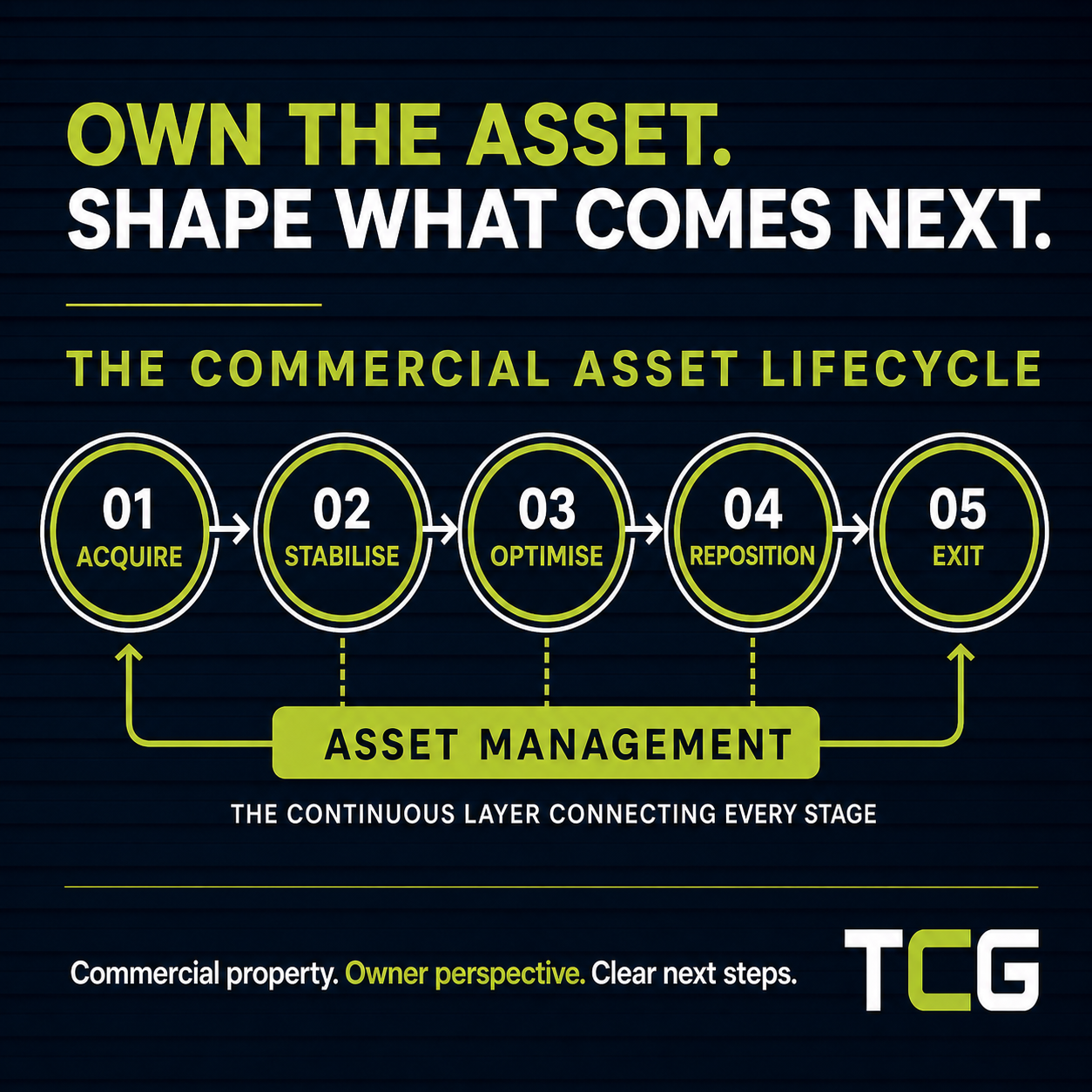
Commercial Property Has a Lifecycle
A commercial property moves through connected stages: acquisition, leasing, occupation, administration, reviews, capital decisions, repositioning and eventual sale.
Every decision affects what comes next. Lease structure can influence valuation; expiry dates can affect refinancing or saleability; capital expenditure can affect tenant retention; and security and outgoings provisions can shape risk and returns for years.
None of these decisions sits neatly in isolation.
Outgoings are a Simple Example
"Tenant to pay outgoings" sounds straightforward.
But what does it actually mean?
Is the tenant paying all outgoings, a proportion based on area, or only increases above a base year? Are management fees and land tax recoverable? How are common-area costs, GST and reconciliations handled?
These are practical questions. They affect the landlord’s income and the tenant’s occupancy cost, often for years.
Understanding the real-world effect of a clause makes it easier to negotiate properly from the beginning. The same applies to security, rent reviews, options, maintenance and make good.
Final Thoughts
There will always be a place for strong leasing agents and good dealmakers. Increasingly, however, the market will favour advisers who combine transactional ability with a broader understanding of income, risk, lease administration, tenant relationships, capital expenditure and future value.
A good deal is not just one that gets signed. It is one that still makes sense years later.
That is where we believe commercial property advice is heading—and the questions landlords and tenants are now asking suggest the market is heading there too.